Tuesday, 22 January 2008

St. Paul's in Deptford


Two rather moody shot of the St. Paul's in Deptford, one of the finest examples of Baroque architecture in London. People living here told me that it used to host wild goth parties in the early 90's, but I'm not sure if this is a fact, or an urban myth. You can see what it looks like from the air on this link from Google Maps.

London Street Art

Houses...

...and a door decorated with attractive street art in Deptford, London.

Matisse in Bodrum


A power transformer painted over with reproductions of Henri Matisse's The Dance? It could only happen in Bodrum, one of Turkey's most liberal places.

Saturday, 19 January 2008

One Year After Hrant Dink

Yesterday, the 19th of January, was the first anniversary of Hrant Dink's murder. One year ago, tens of thousands had spontaneously gathered where he was killed and assembled into a peaceful demonstration condemning the murder. "We're all Armenians" was their rallying cry, protesting the government's cumbersome, half-hearted efforts at prosecuting the killer, as well as its repressive attitude towards the remaining minorities in Turkey.

One year later, things were considerably different as the "peaceful" protesters worked themselves into a frenzy, attacking and trashing surrounding buildings, shops and offices and effectively spoiling the nobility of their cause

Curiously, this screw-up led my mind back to a similar, but completely unrelated conflict that took place around Hrant Dink's death, last year in my university. A huge on-line fight had flared up over the issue of gay rights in Turkey. A few days later, someone sprayed these "We're all faggots" stencils all over the campus, hitting two birds with one politically-incorrect stone by ridiculing gay rights and anti-nationalist activists in one go. The graffiti themselves later assumed the nature of the insult ridden school forums, replaying the crass exchange of insults on a simpler chalk-and-pencil medium.

I was convinced around then that Turkish people would take a long time abandon their over-the-top and pumped-up attitudes when defending their ideas, whatever they might be.

Saturday, 12 January 2008

At the Citadel of Bus People

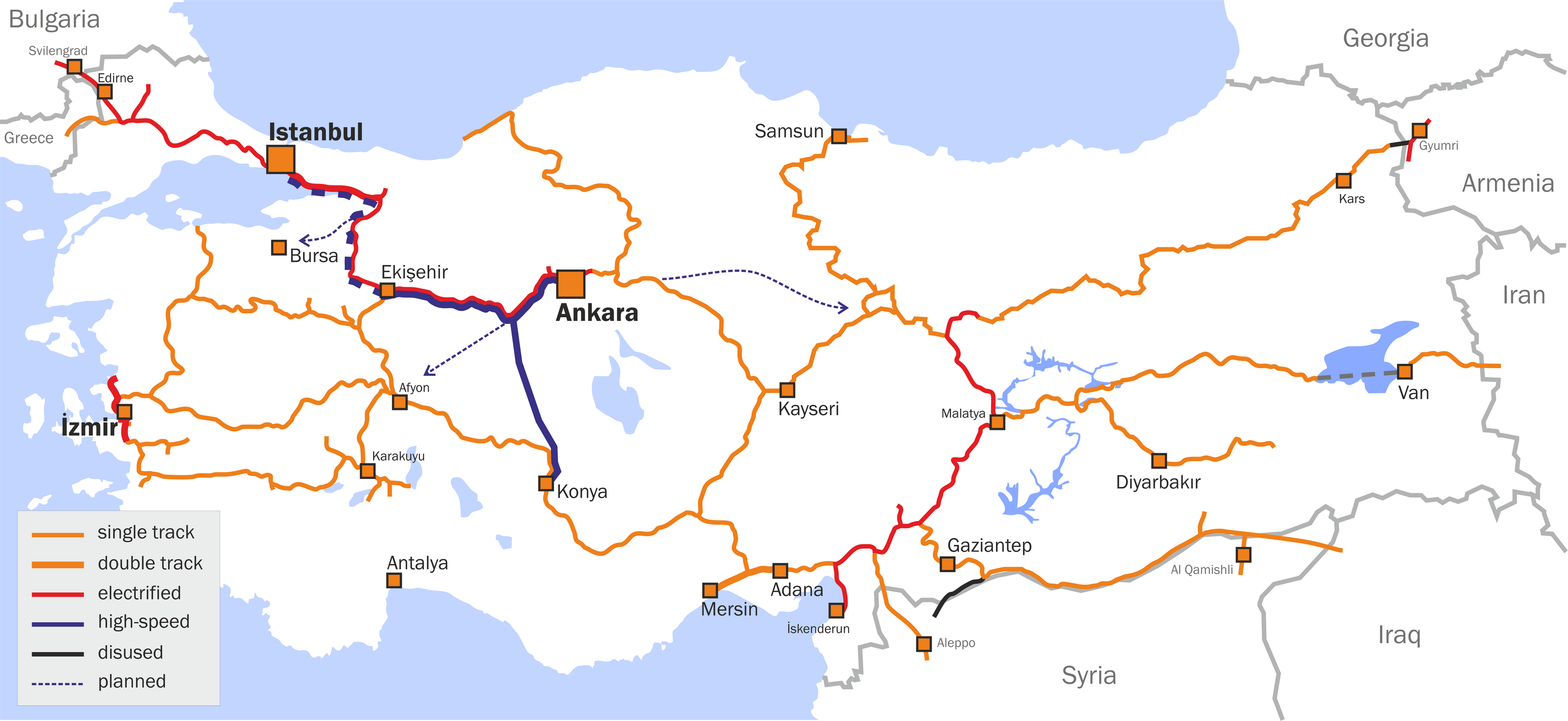
Turkey may not have a decent railroad network, but it has one of the most developed coach systems of any country. Not in many other places can you hope to catch a bus from one end to the other of a 783,562 km² country in less than twenty-four hours. This summer me and my girlfriend took such a journey, and got a chance to photograph one of the chaotic coach hubs in the middle of western Anatolia. Behold the citadel of... bus people!

The glowing panoply of coach company signs immediately announce the presence of a bus terminal in Turkey. This mini-terminal, in the Aegean-coast town of Bodrum, has signs for companies that trave as far as Lake Van and Diyarbakir. We asked, the longest journeys apparently took thirty-six hours... without stops!

Here and below, the anarchy of multi-colored coach company logos in the main bus terminal in Smyrna.

So many choices, so little time. Coaches arrive and depart by the second. People crowd at one of the hundreds of little kiosks to grab a ticket.

Sitting next to a lady? Some of the more "traditional" bus companies reserve tickets for women only next to other female passengers. Opinion is divided on whether this is a repression of women's rights, or an honest attempt to protect people from young, horny, leering assholes whose only idea of male-to-female interaction is rape.

After getting your tickets, you can grab a road reader from this depressing little bookstore.

Almost all Turkish coaches come equipped with a toilet, but taking a dump is recommended before boarding. Want to queue up at the metro-like megatoilet?

The walls of lavatories are covered with the horribly misogynistic statements, homosexual innuendo and phone-in promises common in roadside toilets everywhere. After the number, the text translates as; "I AM ACTIVE CALL ME BRING YOUR MOTHER AND HAVE HER FROM THE ASS MAY I F**K YOUR MOTHER WIFE OF-." Yes, is sounds as senseless in Turkish as well.

You are advised to try the bus stations' horrible blend of oily, greasy rat-bait food at your own risks.

A weary traveler enjoys a last-minute meal as he contemplates his final destination.

Despite their stink, crowds and ultimate hostility to human comfort, such centers connect the entire country in an efficient, if uncomfortable network.

Shahmaran

Half-woman, half-snake, all goddess. A framed picture of the hybrid Anatolian Shahmaran folk figure decorates most houses in Anatolia. This bizarre figure has been attributed to old Greek, Alevi or even Kurdish myths, but probably is an antique vestige that predates them all.

Wednesday, 9 January 2008

Aztec Death Masks


Three Aztec/Mixtec ceremonial masks from the British Museum, dating back to the mid 1400s. Beautifully inlaid with turquoise and obsidian, these objects are gruesomely built around human skulls.

Vomit in the Streets of London

A British Classic: Drunken people helping their drunken friends vomit on the pavement. To be fair, such scenes can be observed in almost any metropolis in the world.

To illustrate my point, here is another example, this time from Istanbul. Behold the vomit-clogged sinks of the infamous Bambi Bufe in Taksim.

A Dolphin's Skull

This photo and below; two views of a dolphin's skull which I saw for sale in a junk and antique shop in Alaçatı.

Several species of dolphins inhabit Turkish coasts, I am not certain which one this is.

Tuesday, 8 January 2008

Across the Bosphorus

Let's take a brief boat ride through the dreamy, postcard-like vistas of... the Bosphorus!

While the rest of the City is infected with crowds and decay, the Bosphorus is the one place where none of this shows. Buildings, groves, palaces and gardens still retain their Ottoman grandeur.

This gigantic, palace like building is the Kuleli Military Academy, the Turkish equivalent of West Point. The first buildings of this huge complex were built in the early 1800s, to train cavalry officers.

The seaside is full of more palaces and villas than one can count. I sadly don't know much about this particular, elegant one.

The famous "sunset fires" set the bosphorus ablaze in dazzling series of window reflections every afternoon. Urban legend has it that clueless immigrants, upon seeing the myriad flashes, would alert the local fire brigade, thinking that the houses were actually burning!

Yet another amazing house that I'll probably never get to own...

...and another! The houses along the straits are among the most expensive properties in Turkey.

Out of all the houses of the Bosphorus, this is perhaps the most famous. It might not look like much, but the famous Amcazade Huseyin Pasha mansion dates back to 1699, when Ottoman power was at its zenith. It is the only surviving building that reflects the architectural style of its times, and efforts are underway to rescue it, as you can see from the newly-erected scaffolding around it.

Monday, 31 December 2007

A Cicada

A friendly European Cicada (Cicada cretensis) that blundered into my hair this summer in Athens. Just look at the intricate, circuit-etching-like pattern on its wings. Wow!

Sunday, 30 December 2007

Christmastime in Istanbul

With 48 hours left until 2008, all of Istanbul is preparing for a very Christmas-like New Year, complete with Christmas trees, reindeer, Turkish Santas and zombie-like shopping sprees. Although Christmas symbols in Turkey seem at first like a bizarre mismatch, people here are used to them because of the country's secular urban tradition.

Above are three hopeful shoppers from the Nisantasi district.

The streets and squares are also decked out with lights, although nowhere as lavishly as in Europe or America. The entire holiday is commercialized to the fullest; this tacky ur-Xmas tree is sponsored by the "happiness factory" commercials of a major soft drink company.

Thursday, 27 December 2007

A Trip to Alacati

Here is a long post about Alacati, one of the Turkish Aegean's nicest vacation spots. I'd been promoising myself to publish this one for about... five months. Only now could I get around to doing it.

On first sight, Alacati resembles a cross between The French Riviera and a Greek island that has rammed itself into the Anatolian mainland. This resemblance is no surprise, since, like most of the nicer places along the Turkish Aegean, Alacati was a populous Greek town before the population exchange between Greece and Turkey in 1923. Unlike most of the other Greek settlements in Turkey, however, Alacati's beautiful architecture was preserved until today. Here, you can see the town square, with busts of Kemal Atatürk and Ismet Inönü proclaiming Alacatı's strongly secular, republican character.

The beautifully preserved neo-classic buildings and cobblestone alleys branch out from the main square, leading to an endless series of restaurants, hostels, shops and guest houses.

Here is an old door, probably untouched for eighty years or more...

...and here is a beautifully restored new one. Such respectful preservation of old structures is sadly very, very rare in Turkey. (But they are working on it!)

A chip on one of the houses' walls shows an antique layer of blue, overlaid with purple and at least four coats of lime white in the last few decades...

...while the paint is cracking on this nicely aged house, now used as a motel.

Yet another nice example of Alacati's architecture...

...and another, newer one, now in use as a ridiculously overpriced hotel.

Not all Alacati houses are hotels. This one, called "Ayse's Locker," is a designer boutique.

Such dress shops, jewelry and bauble stores are all over the place in Alacati! I frankly find some of them quite daft and vapid...

...but thousands of customers every summer, like these nice ladies, would probably disagree.

Despite all the beauty, Alacati does have some weird, "Blade Runner" kinds of senselessly-built houses that characterize most of Turkey.

At least there are only a handful of such eyesores. This one, at the entrance of the town, is one of the nastiest.

Houses like this always remind me of the cult PC-Adventure Neverhood. These few years, they are thankfully being knocked down and replaced by retro-neoclassical versions.

Moreover, newer old houses are are continually entering the local property market, available to refurbish and restore to your heart's content. With more local properties available than ever before to foreigners, why not give Alacati a look too, dear (affluent) readers?